Cape Cod Renovation Mistakes: 7 Worst, With Simple Fixes
The costliest Cape Cod renovation mistakes are almost never bad taste. They are ordinary, reasonable-sounding decisions made in the wrong order — usually months before anyone picks a tile.
Here are the seven that show up most often, what each one actually costs, and the simple thing that would have prevented it.
In this guide
The 7 Cape Cod renovation mistakes
1. Designing before checking what the site allows
What happens: Drawings get produced for an addition that lot coverage, setbacks, or septic capacity will not support.
What it costs: The design fee, twice. Plus the months between the first set and the revised one — frequently an entire construction season.
Simple fix: Spend one morning on coverage, setbacks, septic rating, and conservation jurisdiction before anyone draws. It is the cheapest insurance in the whole process.
2. Adding a bedroom without checking the septic
What happens: A bonus room over the garage gets designed and permitted as a bedroom, and the existing system is not rated for the additional bedroom.
What it costs: A septic upgrade that can exceed the cost of the room. On a constrained lot, it can also mean the room simply cannot be built.
Simple fix: Get the current rating in writing, and have the plan reviewed for how the town will classify each new room — a door, a closet and a window can be enough to make one count.
3. Finishing surfaces over problems
What happens: A basement gets finished without resolving water first. New drywall goes over failing wiring. Beautiful flooring goes down over an unaddressed moisture source.
What it costs: The finish work twice, plus whatever the underlying problem did while it was hidden.
Simple fix: Deal with water, structure, and systems before anything decorative. Our post on basement waterproofing covers the sequence for the most common version of this.
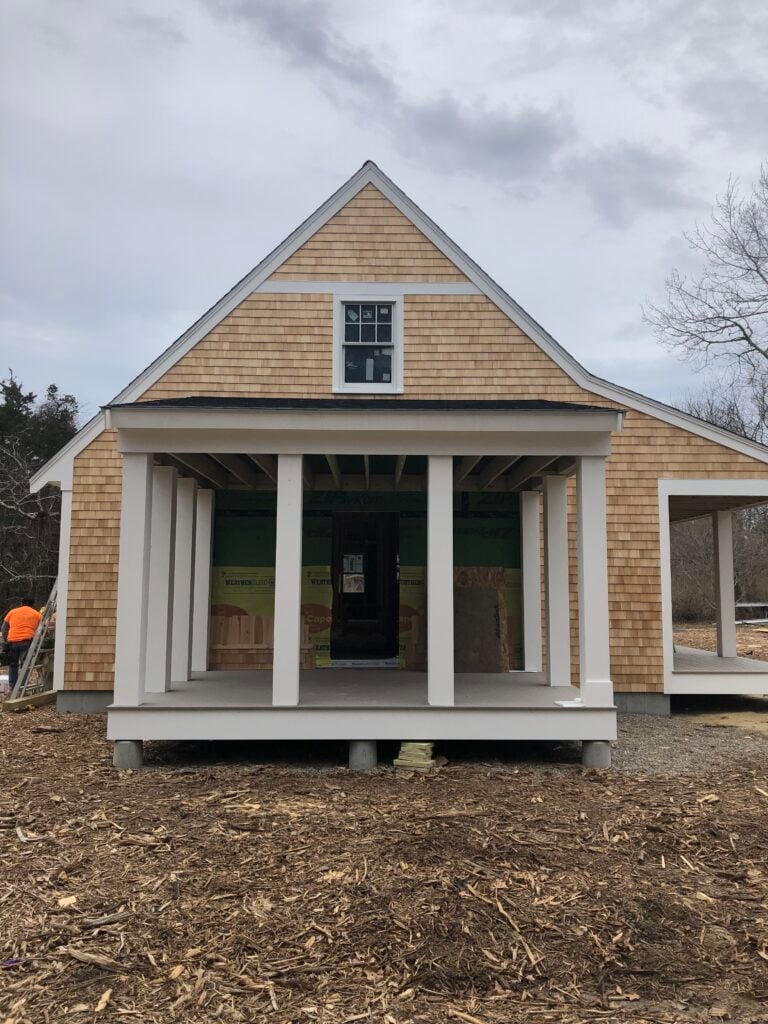
4. Skipping insulation while the walls are open
What happens: A renovation opens the walls, insulation is deferred to “next year” for budget reasons, and the walls close.
What it costs: Several times what it would have. Doing it later means opening finished walls, then repairing and repainting them — and most people never do, so the house stays as it was.
Simple fix: Treat open walls as a one-time opportunity. If the budget is genuinely tight, cut something visible instead — you can add that back later, and you cannot easily add this.
5. Over-opening the floor plan
What happens: Every interior wall that can come out, comes out.
What it costs: Structural work that was not needed, plus a house with nowhere quiet, poor acoustics, awkward furniture placement, and — in an older Cape — the loss of the room rhythm that gave it character. This is the one people undo a decade later.
Simple fix: Open the one wall genuinely in the way. Keep the rest. More on where this lands well in our post on Cape Cod renovation ideas.
6. Choosing materials that do not suit salt air
What happens: Standard fasteners, unsuitable hardware, or exterior finishes specified as if the house were forty miles inland.
What it costs: Premature failure, usually just outside any warranty, and often in a location that requires taking something apart to reach.
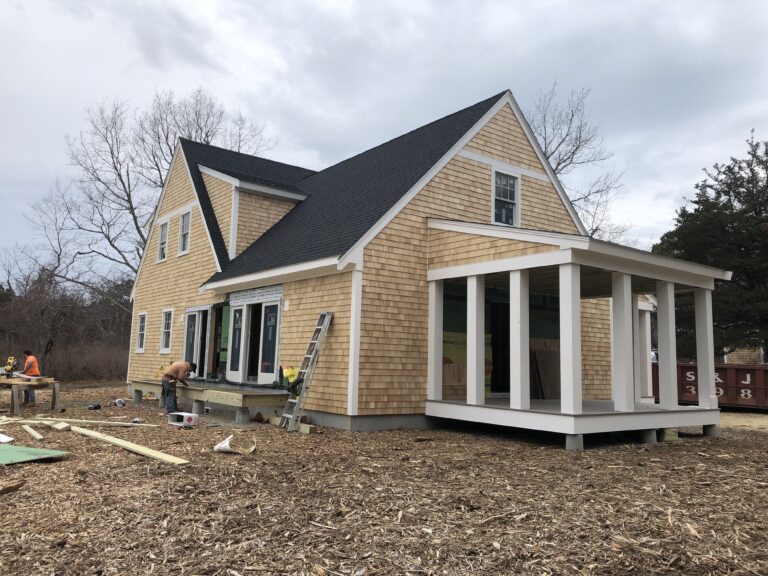
Simple fix: Specify for the actual exposure — stainless where it matters, corrosion-resistant equipment near the shore, and cladding chosen to weather rather than to resist weathering. Our guide to cedar shingle maintenance covers how that ages.
7. Hiring on price alone, without checking licensing
What happens: The low bid wins, and it is low because it is incomplete, or because the person carrying it is not properly licensed and insured.
What it costs: Change orders that erase the difference, unpermitted work that surfaces at sale, and no recourse if something goes wrong.
Simple fix: Compare scopes rather than totals — a cheap bid is usually a smaller one. And verify the Construction Supervisor License and Home Improvement Contractor registration. Both are checkable in minutes.
The pattern underneath them
Six of these seven are the same mistake wearing different clothes: a decision made before the information that should have governed it was available. Not carelessness — sequence.
Renovation rewards front-loading unglamorous work. The site facts, the structural assessment, the septic rating, the licensing check. None of it is enjoyable and all of it is cheap relative to what it prevents.
The order that avoids most of it
- Site facts — coverage, setbacks, septic rating, conservation jurisdiction, flood zone.
- Condition assessment — foundation, structure, water, wiring, roof.
- Scope, set against what steps 1 and 2 actually permit.
- Design inside that envelope.
- Permits and approvals.
- Structure, then systems, then insulation, then finishes — in that order, never reversed.
The FAQ covers what each of those six steps typically takes.
Custom Crafted Homes has spent five decades preventing and undoing these — second-generation builders, third generation here — across all 15 Cape Cod towns, Yarmouth included. If you have a project in mind, the most useful thing we can do is walk it before you commit to a scope. Our general contracting page shows the range we cover. Call (508) 619-7909 or reach out — we respond within one business day.
Custom Crafted Homes is a family-owned custom home builder and remodeling contractor based in Dennis, MA, serving all 15 Cape Cod towns since 1974. Fully licensed and insured — MA Construction Supervisor License #CS-074943, Home Improvement Contractor Registration #169552.